2026 Best Large Display Digital Clock for Global Buyers?
As the demand for effective timekeeping solutions grows, the market for Large Display Digital Clocks is evolving rapidly. Experts in the field, like Dr. Michael Hargrove, emphasize their importance, stating, "A clear display can make a significant difference in time management." This insight reflects the pressing need for visibility and accessibility in our increasingly busy lives.
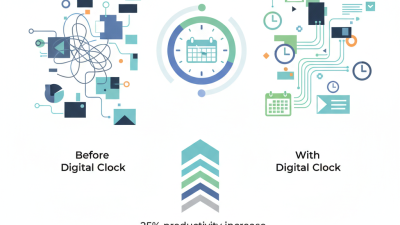
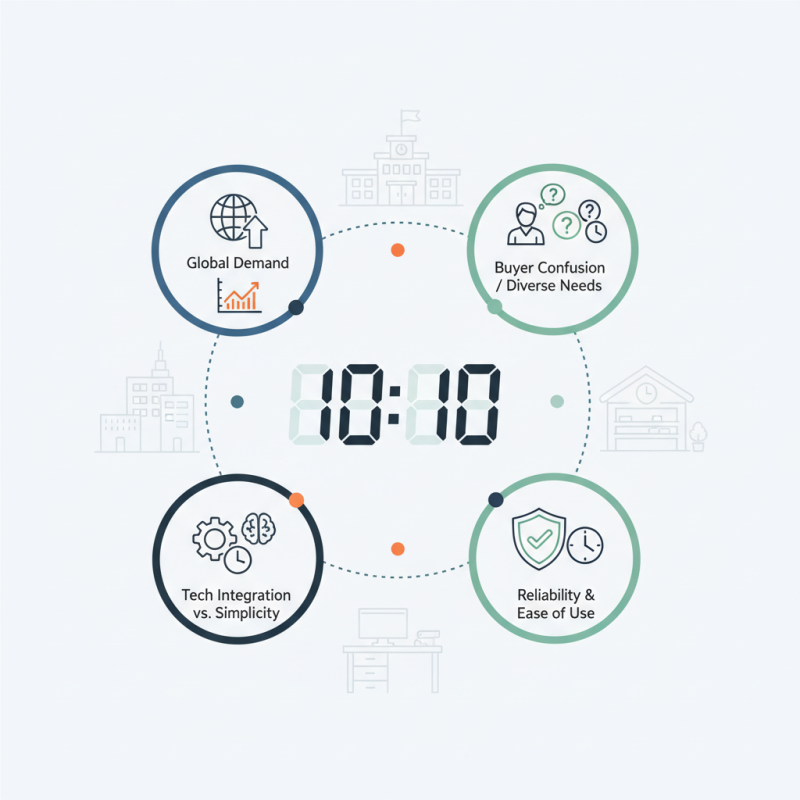
In various environments, such as offices, schools, and even warehouses, a Large Display Digital Clock can enhance productivity. A well-designed clock aids in reducing mistakes and improving coordination. However, challenges remain in standardizing sizes and features to meet diverse buyer needs. Buyers often face confusion due to the variety of choices available.
Moreover, the integration of technology with traditional displays raises questions. How much smart technology is needed, and does it outweigh the simplicity of a classic design? As consumers navigate these options, ensuring reliability and ease of use remains essential. Evaluating what truly matters in a Large Display Digital Clock can lead to better choices and satisfaction.
Overview of Large Display Digital Clocks in the Global Market
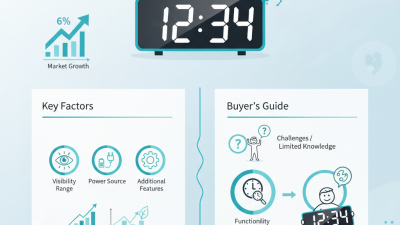
The global market for large display digital clocks is evolving rapidly. According to a recent industry report, the demand for such clocks is expected to reach $1.5 billion by 2026. These clocks are not only vital for commercial spaces, but also serve educational and home environments. Their visibility is crucial, especially in large spaces where traditional clocks fall short.
Customization options are also expanding. Many consumers prefer clocks with features like adjustable brightness and multiple time zone displays. This adaptability is appealing for international businesses and educational institutions. However, challenges exist. Product quality varies widely, which can lead to issues with durability and accuracy. Numerous customers have reported dissatisfaction with short battery life or poor display visibility in bright light conditions.
Market research indicates that user preferences are shifting. A significant portion of buyers values digital features over analog designs. Still, there is a portion of the market that remains skeptical. They question the reliability of technology in essential items like timekeeping devices. This skepticism can impede purchasing decisions, highlighting a need for manufacturers to improve both functionality and consumer trust.
Key Features to Consider When Choosing a Large Display Digital Clock
When selecting a large display digital clock, several key features stand out. One crucial aspect is visibility. Research indicates that clocks with a display size of at least 12 inches enhance readability from a distance. This is especially important in commercial spaces or large rooms. The brightness of the display also plays a significant role. Clocks with adjustable brightness settings can adapt to varying lighting conditions, ensuring visibility throughout the day and night.
Material quality cannot be overlooked. A durable casing can withstand wear and tear, making the clock suitable for various environments. Additionally, many consumers prefer clocks with a minimalist design. Sleek aesthetics often integrate seamlessly into modern decor. It is noted that around 40% of users prioritize design over functionality, highlighting the importance of aesthetics.
Tips: Consider the power source as well. Some clocks offer backup batteries, which ensure functionality during power outages. Pay attention to customer reviews, as they often provide insights into long-term reliability. With varying options available, explore models that suit both needs and preferences. Your choice should balance functionality, visibility, and style for optimal satisfaction.
Top Brands Offering Large Display Digital Clocks in 2026
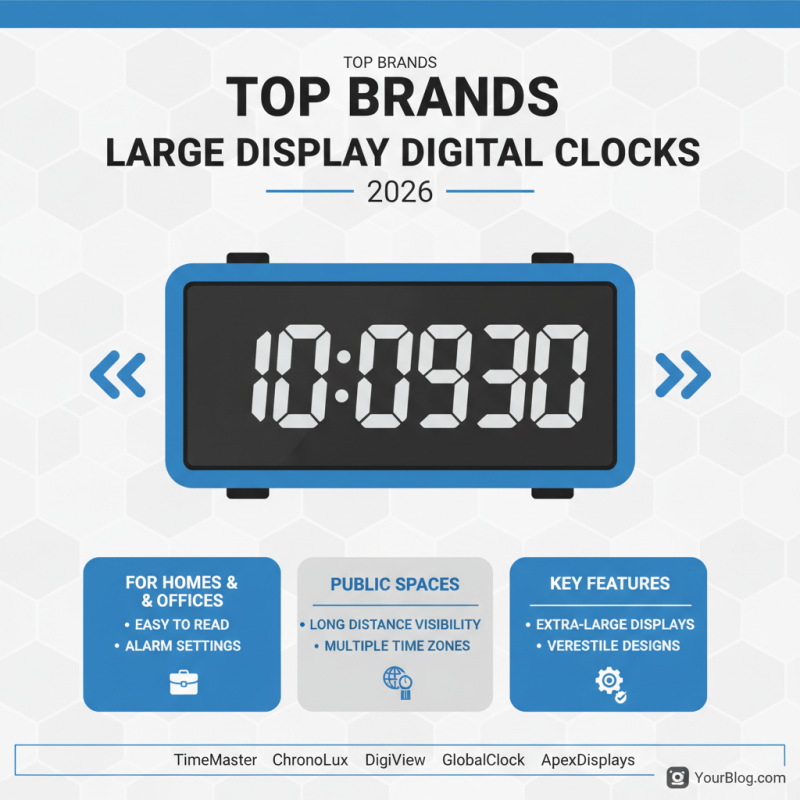
As the demand for large display digital clocks increases, several brands are emerging in 2026. They cater to diverse needs. These clocks are perfect for homes, offices, or public spaces. Their readability from a distance makes them stand out. Many models now offer features like multiple time zones and alarm settings.
Choosing a large display digital clock involves considering several factors. Display size matters significantly. Ensure you select a size that suits your space. Additionally, brightness levels can vary. It’s worth checking if the display is adjustable for day and night settings. Many clocks have modern designs, but practicality should not be overlooked.
Tips: Always read customer reviews for insights on reliability. Purchasing from established retailers can also enhance your experience. Consider if you need extra features like temperature displays or calendar functions. Aim to find a balance between functionality and style.
Comparative Analysis of Pricing and Value for Large Display Clocks
When examining large display digital clocks, pricing and value become critical factors for global consumers. Research indicates that the average price range for these clocks is between $30 and $200. This price range significantly influences purchasing decisions. Those purchasing for offices or schools often prioritize functionality over aesthetics. They seek reliable features that enhance time readability.
In a recent survey, over 60% of respondents stated clarity and ease of use are their highest priorities. Many consumers overlook features like alarm settings and backlighting when they do not align with these needs. Additionally, price competitiveness affects perceived value. Several studies emphasize that even a small price difference can sway consumer choices.
Despite this, many large display clocks often miss the mark in value offerings. Some models claim advanced features but do not provide adequate performance. Customers frequently express dissatisfaction with durability after initial usage. There is also an observed trend where more expensive models do not always guarantee superior quality. Vendors must reflect on this discrepancy between price and actual value delivered.
Customer Reviews and Ratings of Popular Large Display Digital Clocks
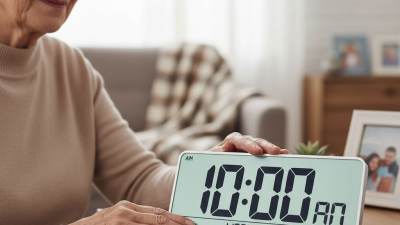
When searching for the best large display digital clock in 2026, customer reviews are invaluable. Many buyers prioritize visibility and ease of use. Reviewers often highlight the importance of large, clear digits. These features enhance the user experience, especially for those with visual impairments. A common concern is the brightness of the display. Some users wish for adjustable brightness to suit different environments.
Customer ratings reveal a mix of preferences. Some appreciate clocks with multiple functions, like alarms and timers. Yet, some critiques target excessive features that complicate usage. Simplicity remains key for many consumers. Users frequently share their experiences in various settings, from bedrooms to offices. They note how the clock's size affects readability from a distance. Feedback also emphasizes durability—making it essential for long-term satisfaction.
Interestingly, not all clocks live up to expectations. Complaints about noise from alarm functions or unreliable timekeeping appear in reviews. These insights provide essential guidance for potential buyers. They illustrate the importance of selecting a clock that balances functionality with reliability. Taking the time to read these perspectives can lead to a more informed purchase.