2026 How to Choose the Perfect Decorative Table Clock?
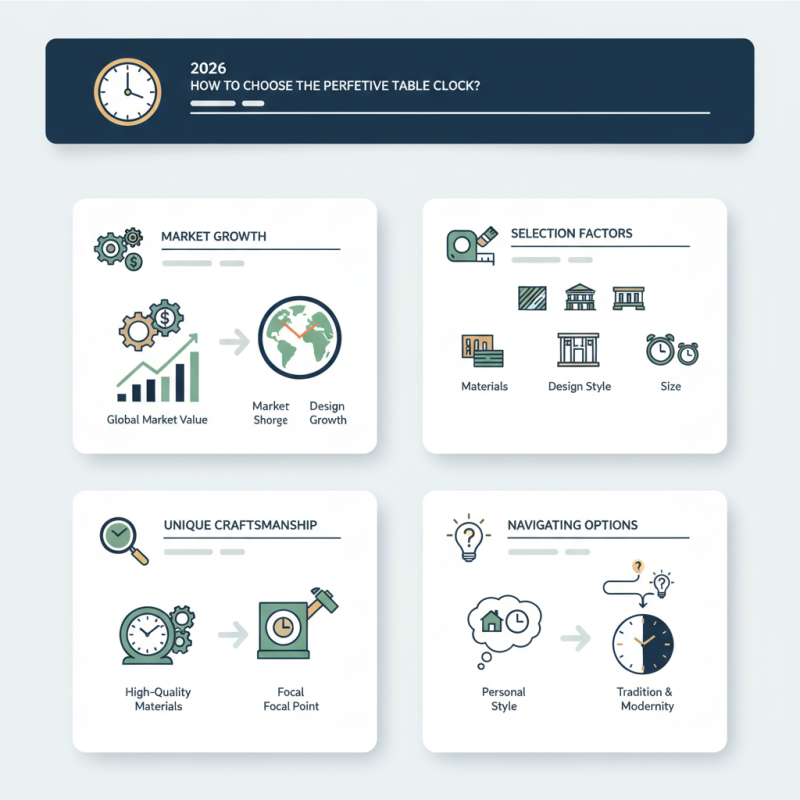
In recent years, the market for decorative table clocks has seen significant growth. According to a 2022 report by Statista, the global clock market was valued at approximately $8 billion, with decorative table clocks accounting for a substantial segment. This growth reflects a rising interest in home decor, where functionality meets aesthetic appeal.
Selecting the perfect decorative table clock requires careful consideration of various factors. The choice of materials, design style, and size can influence how well it complements your space. A clock that incorporates unique craftsmanship can become a focal point in any room. Experts suggest focusing on high-quality materials that reflect personal taste and enhance home aesthetics.
It’s important to acknowledge the overwhelming array of options available. Many consumers feel lost amid countless styles and brands. Therefore, understanding the specific needs of your space can guide your selection. A clock that resonates with your style can invigorate your living area. Ultimately, the right decorative table clock can combine tradition and modernity, enhancing the overall charm of your home.
Factors to Consider When Choosing a Decorative Table Clock
Choosing the perfect decorative table clock requires careful consideration of various factors.
One important aspect is the design. According to the
Furniture Today report, over 60% of consumers prioritize
aesthetics when selecting home decor. A well-designed clock can enhance your room’s style, whether it’s
modern, vintage, or eclectic. Look for colors and materials that complement your existing decor.
Another significant factor is size and functionality. A clock that is too large
can overwhelm a small space, while a tiny clock may get lost on a large table. Research shows that the
standard size for decorative clocks is around 10 to 12 inches in diameter. Additionally,
consider features like alarm functions or glowing dials for added utility.
Tips: Before purchasing, measure your table space. Visualize
the clock in the setting. Also, the positioning should allow for easy visibility without distortion.
Think about how the clock will be used daily. It should fit your lifestyle, not just your decor.
Lastly, the quality of the clock matters. Look for durable materials like
metal or wood. Journals in interior design stress the importance of craftsmanship in home decor items.
Remember to reflect on your preferences. Personal style should always
play a role in your final decision.
Different Styles of Decorative Table Clocks for Various Interiors
Decorative table clocks come in various styles, each capable of complementing different interior designs. According to a recent report by the Home Goods Association, nearly 70% of consumers find that decorative items, including clocks, significantly enhance their living spaces. For a modern aesthetic, sleek metallic designs or minimalist clocks in neutral tones can seamlessly anchor a contemporary room. The challenge lies in balancing functionality and decoration, where sometimes the clock's design overshadows its timekeeping purpose.
In contrast, vintage-style clocks often bring warmth to traditional or rustic interiors. These pieces, often crafted from wood or featuring ornate designs, can evoke nostalgia. Reports indicate that over 60% of homeowners seek items that not only serve a purpose but also tell a story. Yet, one must consider the potential for clutter. A crowded tabletop filled with large clocks may divert attention. Finding that equilibrium is crucial. Striking details like hand-painted numbers or unusual shapes can elevate the decor but may also require more thoughtful placement. As you explore different styles, keep an open mind about how each piece fits into your overall theme.
2026 Decorative Table Clock Styles and Popularity
Materials and Finishes: What to Look for in a Table Clock
When selecting the perfect decorative table clock, the materials and finishes are crucial factors. Each material tells a different story. Wood adds warmth, while metal provides a sleek, modern touch. Consider how these materials blend with your existing decor. A wooden clock may look charming in a rustic setting. Meanwhile, a metal clock can serve as a striking centerpiece in a minimalist room.
Finishes can also affect the clock's overall appeal. A polished surface catches the light, drawing attention. A matte finish offers subtlety, fitting seamlessly into any room. Look for clocks with unique textures. They can elevate the design and give depth to your decor. A clock with a distressed finish shows character but might not suit every aesthetic. Reflect on what speaks to you and your space.
Don’t forget about functionality. A beautifully crafted clock should also be easy to read and operate. Some designs prioritize aesthetics over practicality, which can be frustrating. Choosing the right balance can be challenging. Always think about how the clock will function in your daily life. Let these considerations guide your decision, ensuring you choose a clock that resonates with you while maintaining its decorative purpose.
2026 How to Choose the Perfect Decorative Table Clock? - Materials and Finishes: What to Look for in a Table Clock
| Material |
Finish Type |
Durability |
Aesthetic Appeal |
Price Range |
| Wood |
Natural |
High |
Warm & Classic |
$50 - $200 |
| Metal |
Polished |
Medium |
Sleek & Modern |
$30 - $150 |
| Glass |
Frosted |
Low |
Elegant & Contemporary |
$40 - $120 |
| Ceramic |
Glossy |
Medium |
Artistic & Unique |
$20 - $80 |
| Plastic |
Matte |
Low |
Trendy & Versatile |
$10 - $40 |
Functionality vs. Aesthetics: Finding the Right Balance
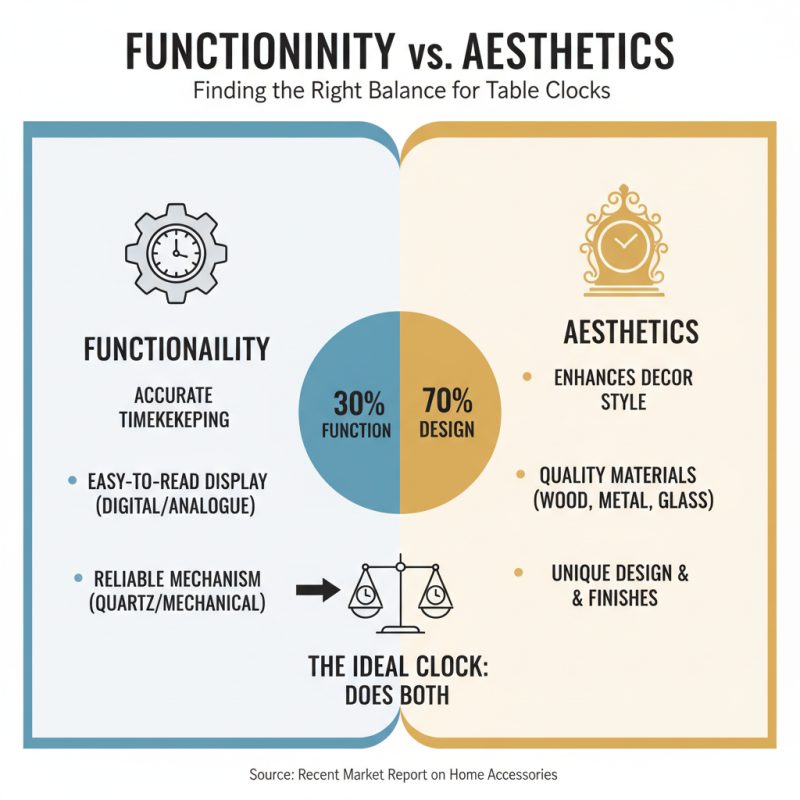
Choosing a decorative table clock involves balancing functionality and aesthetics. Many buyers struggle to find a clock that serves its purpose while enhancing their decor. A recent market report highlights that 70% of consumers prioritize design over functionality when selecting home accessories. Yet, the right clock should do both effectively.
Functionality might involve features like accurate timekeeping, alarms, or even temperature readings. A high-quality movement can significantly impact performance. Meanwhile, aesthetics include the design, color, and material. A clock should complement its surroundings, whether it's a rustic, vintage style or a modern minimalist piece.
**Tip:** Consider the room's color palette. Choose a clock color that either contrasts or harmonizes with existing decor.
Think about the clock’s size and placement. Ensure it fits well with the furniture and doesn’t overwhelm the space. According to design experts, a well-placed clock can be both a conversation starter and a functional item, achieving that perfect balance.
**Tip:** Visit local stores to see the clocks in person. Sometimes, the quality and appeal may differ from online images.
Personal preference plays a crucial role. Take your time and reflect on what resonates with your style. Experimenting with different designs might lead to surprising choices.
Budgeting for Your Decorative Table Clock: Price Ranges and Value
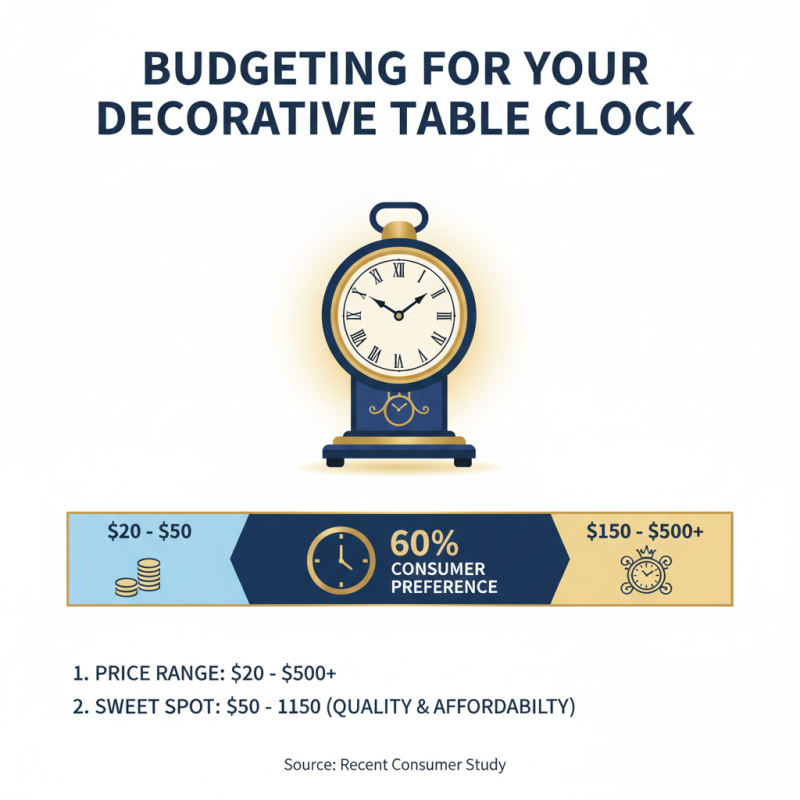
When considering a decorative table clock, budgeting is crucial. Prices for such clocks can vary widely. Typically, they range from $20 to $500. A recent study indicated that 60% of consumers prefer clocks within the $50 to $150 range. This is due to the balance between quality and affordability.
Many people overlook the cost of features. For example, a clock with intricate designs or advanced technology may cost more. Spending on aesthetic elements can yield a unique centerpiece in your home. However, buyers need to remain cautious. Not all expensive clocks ensure superior quality.
Reflecting on value is essential. Value isn't only about price; it's about what you gain. A clock that complements your decor may enhance your space. Conversely, an impulsive purchase can lead to dissatisfaction. Research shows that 40% of consumers regret their decor choices due to hasty decisions. Taking the time to compare options can lead to a more satisfying investment.