Top Digital Calendar Clock Features You Should Know?
In today's fast-paced world, time management is crucial. A Digital Calendar Clock can be a game-changer. It not only tells time but also enhances daily organization. With advanced features, these clocks help users stay on track. They blend functionality with modern design, appealing to various lifestyles.
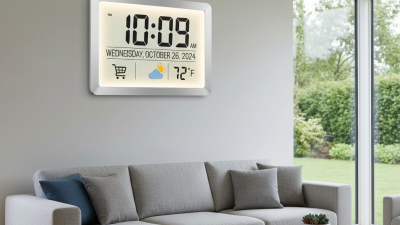
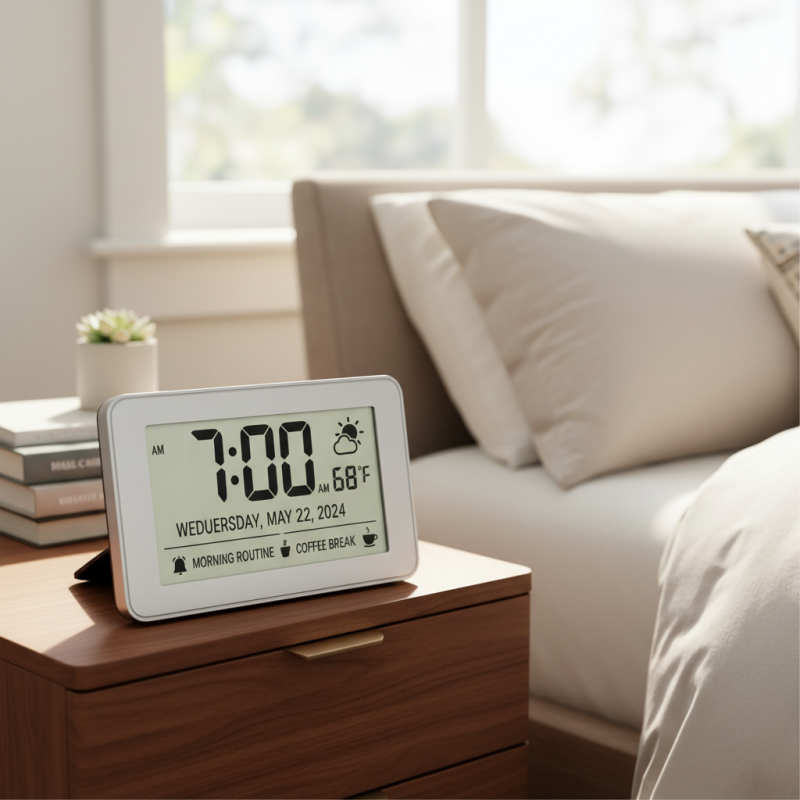
Imagine waking up to a clear display of the date, time, and even weather. Many Digital Calendar Clocks offer customizable displays. Users can toggle between different formats and styles. This versatility adds a personal touch. However, the multitude of features can be overwhelming. Not every clock suits every lifestyle. Some may find complexity unwelcome.
It's important to reflect on what you need. A Digital Calendar Clock should simplify life, not complicate it. Choosing the right features is key. Are you focused on a sleek design, or do you need detailed reminders? Balancing aesthetics with functionality requires thought. Making the best choice can greatly enhance daily routines.
Key Features of Digital Calendar Clocks in Modern Technology
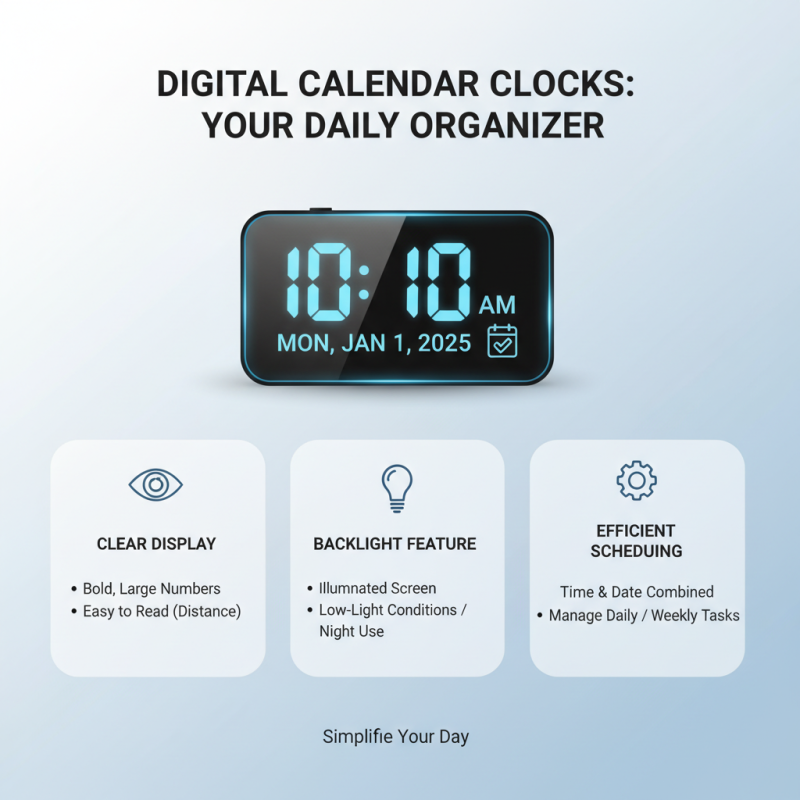
Digital calendar clocks are becoming essential in our daily lives. They combine timekeeping with the features of a calendar. This allows users to manage their schedules efficiently. One key feature is the clear display. Bold numbers make it easy to read at a distance. Many designs also include a backlight for low-light conditions. This can be crucial for late-night use.
Another notable aspect is the ability to sync with other devices. Users can connect their calendars directly. This means no missed appointments. Auditory alarms supplement visual reminders. However, reliance on these functions can lead to issues. If a sync fails, you might miss crucial events.
Some digital calendar clocks come with customizable settings. Users can change themes, alarm sounds, and display formats. This personal touch enhances user experience. Yet, too many options can confuse some. Personalization should add value, not complicate usage. Balancing user-friendly design with advanced features remains a challenge for many manufacturers.
Integration with Smart Home Systems: A Growing Trend
The integration of digital calendar clocks with smart home systems is becoming increasingly popular. According to recent industry reports, nearly 40% of households in the U.S. use some form of smart technology. This trend indicates a shift in how people manage their time and household tasks. With smart home systems, users can sync their digital calendars with various devices. This allows for streamlined notifications and reminders, making daily planning more efficient.
Imagine waking up to a gentle alarm from your digital clock. It can also trigger your coffee maker to brew coffee simultaneously. This level of interaction can enhance morning routines significantly. Reports suggest that 45% of users find this feature increases their productivity. However, integration isn't always seamless. Many users encounter connectivity issues, which can lead to frustration.
Additionally, privacy concerns arise as smart devices collect data. Users want convenience, but they also seek control over their information. Despite the benefits, it's essential to remain cautious. Balancing convenience with security should be a priority for new adopters.
Top Digital Calendar Clock Features You Should Know
| Feature |
Description |
Popularity (%) |
Integration Type |
| Voice Control |
Allows users to set alarms and reminders using voice commands. |
75% |
Smart Home Assistants |
| Mobile App Compatibility |
Syncs with mobile apps to manage schedules on-the-go. |
80% |
iOS & Android |
| Multi-Time Zone Display |
Displays time for multiple locations, perfect for global meetings. |
60% |
World Clock Feature |
| Customizable Themes |
Allows users to change the clock's appearance to match their decor. |
50% |
User Interface Settings |
| Smart Home Integration |
Integrates with lights, doors, and security systems for automation. |
70% |
Home Automation Systems |
User Interface Design: Importance of Accessibility and Usability
User interface design plays a crucial role in digital calendar clocks. Accessibility and usability are often overlooked but essential aspects. Studies show that 1 in 5 people in the U.S. have some form of disability. For these users, poorly designed interfaces can lead to frustration and disengagement.
Many digital calendar clocks fail to provide easy-to-read displays. High contrast between text and background is vital. A study found that 80% of users prefer interfaces with clear visual hierarchy. Simplifying navigation can improve user experience significantly. Yet, many designs remain cluttered and confusing.
On the usability front, digital calendar clocks should cater to diverse user needs. Voice commands can be beneficial. However, research indicates that over 60% of users discard devices that lack intuitive interactions. This trend highlights the need for ongoing improvements in design. Current designs often miss the mark. They can benefit from user testing to ensure inclusivity.
Data Analytics: Tracking Productivity Through Digital Clocks
Digital clocks have evolved significantly. They are no longer just timekeeping devices. Today, they serve as tools for tracking productivity. With the right features, these clocks can help us analyze our daily performance.
Many digital clocks now include data analytics features. They can track how much time you spend on tasks. For example, if you are working on a project, the clock can show how long you are focused. This data helps you understand your work patterns. It might reveal that you spend too much time on minor tasks instead of priorities. This realization can lead to better time management and improved efficiency.
However, relying solely on digital clocks for productivity can be tricky. If you're not careful, you might obsess over numbers instead of focusing on tasks. The data can be overwhelming. It's essential to reflect on what the numbers mean. Are you genuinely productive, or are you just busy? Balancing data analysis with actual work is crucial for success.
Comparative Analysis: Digital vs. Traditional Calendar Clocks in 2023
When comparing digital and traditional calendar clocks in 2023, we see distinct advantages and disadvantages. Digital clocks often offer clarity and intuitive displays. Users can easily read the time and date from various angles. They may also include additional features like alarms and reminders. However, these features can sometimes lead to confusion. Not everyone appreciates the added complexity.
On the other hand, traditional calendar clocks evoke a sense of nostalgia. Many people admire their classic design and craftsmanship. They can enhance home decor in a subtle way. Yet, they lack the functionality of digital options. Reading a small, intricate face may require closer inspection.
Choosing between these two types ultimately depends on individual needs. Some may prefer the simplicity of a traditional clock. Others might enjoy the tech-savvy advantages of digital models. It’s essential to consider personal preferences and lifestyle when making a choice. Reflecting on how each type fits into your daily routine can guide you to the right decision.
Top Digital Calendar Clock Features Comparison