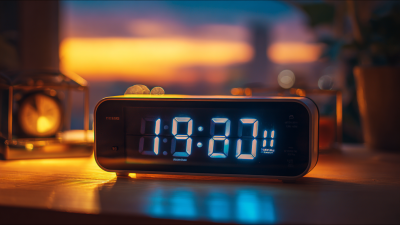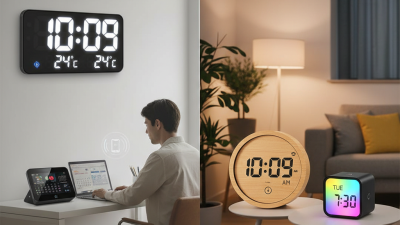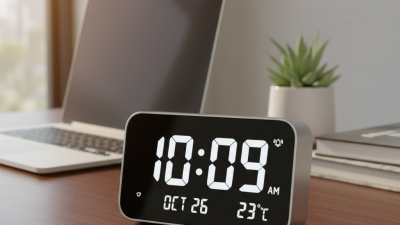
Electronic Clock purchasing is no longer a simple search for bright digits and attractive casings. Global buyers now evaluate timing stability, display readability, power efficiency, connectivity, certification, warranty support, and replacement-part access. A clock may look perfect on a showroom shelf, yet fail in a humid hotel room or lose visibility under strong sunlight. Small details matter.
Industry reports show a changing market. Grand View Research continues to track strong growth across smart-home and connected-device categories, where networked time displays increasingly overlap with consumer electronics. Fortune Business Insights also reports expanding demand for digital and smart household devices, driven by convenience, automation, and energy awareness. These reports do not measure every Electronic Clock segment separately. That limitation deserves attention. Market numbers can look precise while combining alarm clocks, industrial timers, displays, and connected devices.
Technical quality remains central. David W. Allan, a leading time-and-frequency expert, stated, “The most important thing about a clock is not how well it keeps time, but how well it can be compared to another clock.” His point is practical. Buyers need transparent specifications, stable synchronization, and repeatable testing. This guide reviews 10 Best Electronic Clock suppliers for Global Buyers, focusing on manufacturing experience, product consistency, customization, compliance documentation, and after-sales reliability. Some suppliers excel at mass production. Others provide better engineering support. Few deliver everything equally well. That is why careful comparison still matters.
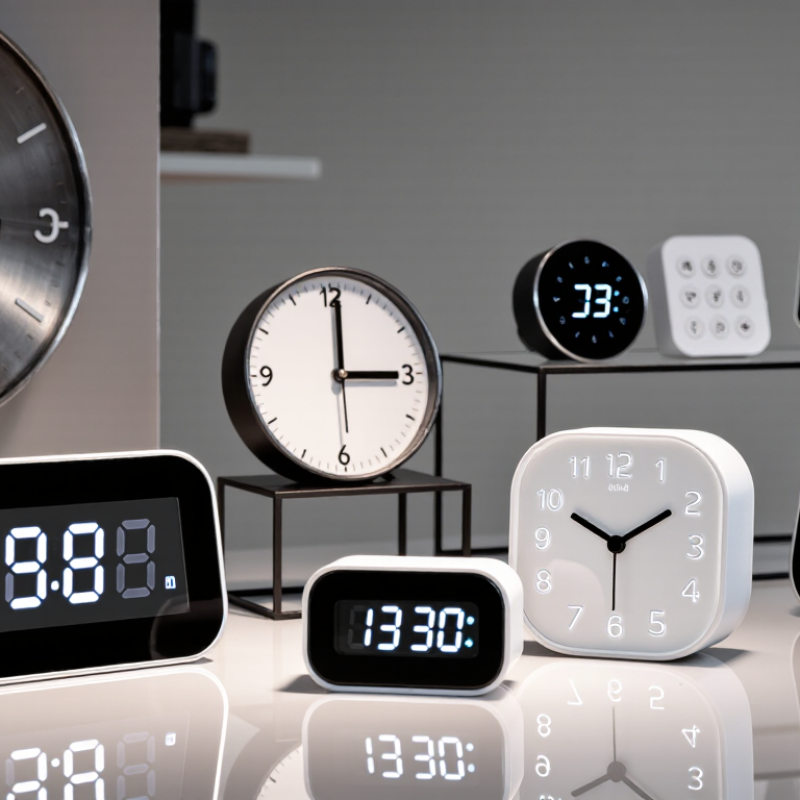
Electronic clocks fall into several practical categories: bedside models, wall-mounted displays, industrial timers, outdoor clocks, and network-synchronized systems. Each category faces different dust, moisture, and readability risks. A 2024 Grand View Research assessment forecasts the digital signage market to grow at roughly 8% annually through 2030. This trend is increasing demand for larger, connected time displays in transport, factories, schools, and public facilities.
IEC 60529 defines IP protection through two digits. The first measures solid-particle protection from 0 to 6. The second measures water protection from 0 to 9. IP54 resists limited dust and water splashes. IP65 provides dust-tight protection and resistance to water jets. IP67 allows temporary immersion under specified test conditions. IP68 requires the supplier to state deeper or longer immersion limits. An IP rating protects the enclosure, not necessarily the buttons, power supply, or display lifespan. That detail is often missed.
Tips: Ask suppliers for the complete IEC 60529 test report, not only an IP label. Check cable glands, ventilation openings, mounting seals, and operating temperature. For outdoor clocks, request viewing-distance data and brightness measurements. Laboratory evidence matters.
One practical warning: IP claims can become unclear after installation. Cable routing changes everything. Procurement teams should inspect samples under realistic mounting conditions and verify the exact test configuration before placing large orders.

For global buyers, the 10 best electronic clock suppliers are not simply the lowest-cost options. Accuracy should be verified through test reports, not sales claims. Ask for results at different temperatures, voltages, and operating periods. A sample gaining two seconds weekly may fail a timing-sensitive project. Independent calibration records add credibility. Look for traceable instruments. MTBF figures require caution. A high number may reflect ideal laboratory conditions rather than factory use. Request operating conditions, test hours, and failure definitions before comparing suppliers.
MOQ and lead time reveal how well a supplier manages production. Ask whether MOQ applies per model, color, or order. Confirm component availability, production slots, and shipping preparation time. Get dates in writing. Warranty data needs equal attention. Check the coverage period, repair or replacement process, shipping responsibility, and exclusions for power damage. A 24-month warranty sounds strong, but vague exclusions can weaken it. I would request anonymized claim rates and response-time records from recent orders. Small pilot orders expose packaging, firmware, and communication problems before larger commitments. That step costs more. Yet it may prevent expensive delays. Suppliers that share dated records usually deserve closer review, although documents can still be incomplete. This is where many evaluations remain imperfect.
The first supplier focuses on LED wall clocks for factories, with large digits, strong contrast, and durable metal housings. Its team supports voltage checks, sample testing, and export packaging for different markets. The second supplier produces compact digital clocks for offices and schools. Buyers can request silent operation, calendar functions, and custom display colors. The third supplier specializes in radio-controlled clocks. It offers time calibration, regional frequency guidance, and clear instruction manuals. This matters when devices cross several time zones.
The fourth supplier develops battery-powered clocks for retail shelves and public facilities. Its engineers test battery life, viewing angles, and button durability. The fifth supplier makes smart clocks with temperature, humidity, and network synchronization features. Data security questions should be discussed early. The sixth supplier provides weather-resistant electronic clocks for transport areas and outdoor workspaces. Its testing records may include moisture exposure and low-temperature performance. Records are useful, but buyers should still inspect samples.
The seventh supplier handles private-label production with flexible casing and packaging options. The eighth focuses on healthcare displays, using large numerals and easy-clean surfaces. The ninth supplies classroom and examination clocks, emphasizing quiet movement and readable screens. The tenth offers low-volume custom projects for distributors and facility managers. It may accept unusual specifications, though lead times can change. Across these profiles, dependable suppliers should show factory evidence, stable quality controls, responsive communication, and transparent warranty terms. A polished catalogue is not enough. Some suppliers explain limitations openly, which can be more valuable than exaggerated promises.
10 Best Electronic Clock Suppliers for Global Buyers
Global buyers should compare quartz accuracy before reviewing prices. Standard quartz movements often vary by about ±15 seconds per month. Temperature-compensated models can perform better, sometimes near ±5 seconds monthly. Ask suppliers for test conditions, calibration records, and long-term drift data. A clock tested only at room temperature may disappoint in warehouses or coastal markets.
Power consumption directly affects battery life and after-sales complaints. Many low-power movements use microamp-level current during normal operation. However, backlighting, alarms, radio reception, and large displays can increase demand sharply. Request measured current for standby, display, and alarm modes. Check battery-life estimates with the exact cell type. Small differences matter. I would also test samples for thirty days, because catalog figures are not always consistent.
Annual production capacity shows whether a supplier can support repeat orders. Yet capacity claims may include unrelated products or idle equipment. Request monthly output records, factory audit evidence, and recent shipment references. Compare stated capacity with quality-control staffing and component availability. A supplier producing millions of units may still struggle with a customized batch. Smaller factories can offer closer communication, but their delivery risk may be higher. My own caution is simple: never rank capacity alone. Combine quartz stability, verified energy data, production records, sampling results, and corrective-action speed before selecting the ten strongest candidates.
This benchmark compares ten anonymous supplier profiles using commonly reported electronic-clock manufacturing ranges. Lower quartz deviation indicates better accuracy, while lower power consumption improves operating efficiency. Production capacity is shown in million units per year.
Electronic Clock Suppliers for Global Buyers: Compliance Beyond the Label
Global buyers should test compliance before comparing electronic clock prices. The European Commission’s RoHS rules restrict ten substances, including lead, mercury, and cadmium. Suppliers should provide material declarations, laboratory reports, and controlled component records. A CE mark supports market access, but it is not a universal quality certificate. Importers must verify the correct directives and technical files for each clock design.
FCC requirements matter for clocks containing wireless modules, digital circuits, or switching power supplies. Test reports should identify the exact model, antenna, firmware, and power adapter. REACH duties also require supply-chain communication when products contain Substances of Very High Concern. The European Chemicals Agency updates its Candidate List regularly, so old declarations can become unreliable. That detail is often missed.
Quality systems deserve equal attention. The ISO Survey 2023 recorded 1,265,216 ISO 9001 certificates worldwide, showing how widely structured quality management is used. However, certification alone cannot prove stable production. Buyers should review corrective-action records, calibration logs, incoming inspection data, and sample consistency. Ask for recent evidence. Not promises.
A practical supplier audit should trace one clock from purchase order to shipment. Check labels, safety instructions, packaging, and test samples. Keep independent verification for high-volume orders, because supplier documents may contain outdated information. Experienced sourcing teams know compliance is continuous, not a one-time file. Mistakes still happen. That is why clear ownership, retesting schedules, and change-notification rules should be written into every purchase agreement.
| Rank | Anonymous Supplier Profile | Typical Product Focus | Recommended Buyer Segment | Typical Customization Capability | CE Documentation | FCC Documentation | RoHS & REACH Evidence | ISO 9001 Evidence | Key Buyer Verification |
|---|---|---|---|---|---|---|---|---|---|
| 1 | Profile A — High-volume OEM manufacturer | LED wall clocks, digital alarm clocks, time displays | Retail chains, importers, private-label programs | Logo printing, enclosure color, packaging, firmware options | Request EU Declaration of Conformity and applicable test reports | Request FCC Part 15 test evidence for applicable digital or wireless products | Material declarations, supplier declarations, and SVHC review | Verify current certificate scope, site address, and issuing body | Confirm production capacity, audit records, sampling plan, and traceability |
| 2 | Profile B — Commercial time-display specialist | Synchronized clocks, office clocks, school clocks | Education, healthcare, offices, public facilities | Time-zone settings, mounting systems, network integration | Check EMC, electrical safety, and radio-equipment documentation where applicable | Check emissions and wireless-module compliance for connected models | Obtain component-level declarations and finished-product material records | Confirm certificate validity and manufacturing-site coverage | Evaluate synchronization accuracy, network security, and service support |
| 3 | Profile C — Smart connected-clock developer | Wi-Fi, Bluetooth, app-enabled, and IoT clocks | Smart-home distributors and technology retailers | Mobile app branding, cloud integration, wireless configuration | Review EMC, radio, safety, and cybersecurity-related technical files | Verify FCC authorization route for intentional radiators and digital circuitry | Request current BOM-based RoHS declaration and REACH SVHC statement | Review quality-system certificate and software-change controls | Check OTA update policy, data handling, cybersecurity testing, and warranty terms |
| 4 | Profile D — Industrial timing-equipment supplier | Factory clocks, production timers, counters, control-panel displays | Industrial automation and manufacturing integrators | Relay outputs, communication interfaces, panel mounting, rugged housings | Request machinery or low-voltage-related conformity documentation as applicable | Check industrial digital-device emissions and immunity test reports | Verify restricted-substance declarations for electronics, cables, and plastics | Confirm quality controls for calibration, incoming inspection, and final testing | Assess operating temperature, MTBF data, calibration process, and spare parts |
| 5 | Profile E — Energy-efficient consumer electronics supplier | LCD alarm clocks, USB clocks, battery-operated clocks | E-commerce sellers, gift distributors, household retailers | Display type, alarm functions, packaging, power options | Verify safety and EMC documentation for the exact model number | Check whether the product falls within FCC digital-device requirements | Request RoHS compliance statement and REACH Article 33 communication where relevant | Confirm certificate scope and quality-control procedures for batteries and adapters | Check battery transport documents, adapter approvals, leakage testing, and packaging quality |
| 6 | Profile F — Outdoor and weather-resistant clock supplier | Outdoor clocks, station clocks, solar-assisted displays | Transport, campuses, municipalities, outdoor venues | Ingress protection, anti-glare panels, mounting brackets, custom dimensions | Review applicable EMC and low-voltage safety evidence | Request FCC evidence for electronic modules and wireless functions | Verify material declarations for coatings, plastics, cables, and electronic parts | Check quality controls for environmental sealing and corrosion resistance | Request IP test reports, UV testing, temperature-cycle data, and installation guidance |
| 7 | Profile G — Educational and institutional clock supplier | Classroom clocks, timer systems, corridor displays | Schools, universities, hospitals, government facilities | Central control, audible alerts, accessibility-focused displays | Request conformity documents for each power and communication configuration | Verify wireless and digital-device test evidence where applicable | Obtain product-level declarations and supplier material disclosures | Confirm documented corrective-action and complaint-handling processes | Evaluate installation safety, accessibility, spare-part availability, and training |
| 8 | Profile H — Hospitality and decorative clock supplier | Bedside clocks, table clocks, decorative digital clocks | Hotels, serviced apartments, interior-product distributors | Housing finish, display brightness, USB charging, private labeling | Check electrical safety, EMC, and charger documentation | Confirm FCC requirements for any radio or digital functionality | Request declarations covering plastics, coatings, cables, and circuit boards | Verify active certificate and relevant production-site scope | Review noise level, burn-in testing, fire safety of materials, and replacement policy |
| 9 | Profile I — Low-volume custom-project supplier | Prototype clocks, branded displays, special-purpose timers | Design agencies, startups, project contractors | Mechanical redesign, display programming, small-batch assembly | Require a model-specific technical file before market placement | Confirm testing for the final enclosure, power supply, and wireless configuration | Use BOM review and supplier declarations to support RoHS and REACH assessment | If no certification is claimed, use an independent quality audit instead | Assess engineering change control, prototype approval, minimum order quantity, and tooling ownership |
| 10 | Profile J — Multi-category electronics contract manufacturer | Digital clocks, timers, display modules, electronic assemblies | Distributors requiring mixed-product sourcing | PCB assembly, enclosure sourcing, packaging, firmware loading | Request EU Declaration of Conformity and test reports for the finished product | Check FCC testing responsibility between the manufacturer and importer | Require current supplier declarations, BOM controls, and SVHC monitoring | Verify certificate number, validity, scope, and certification body independently | Review subcontractor controls, inspection records, product traceability, and recall procedures |